Prevention starts with a conversation - Bulgaria’s Responsible Gaming Foundation addresses youth gambling risks
 Bulgaria
 Canada
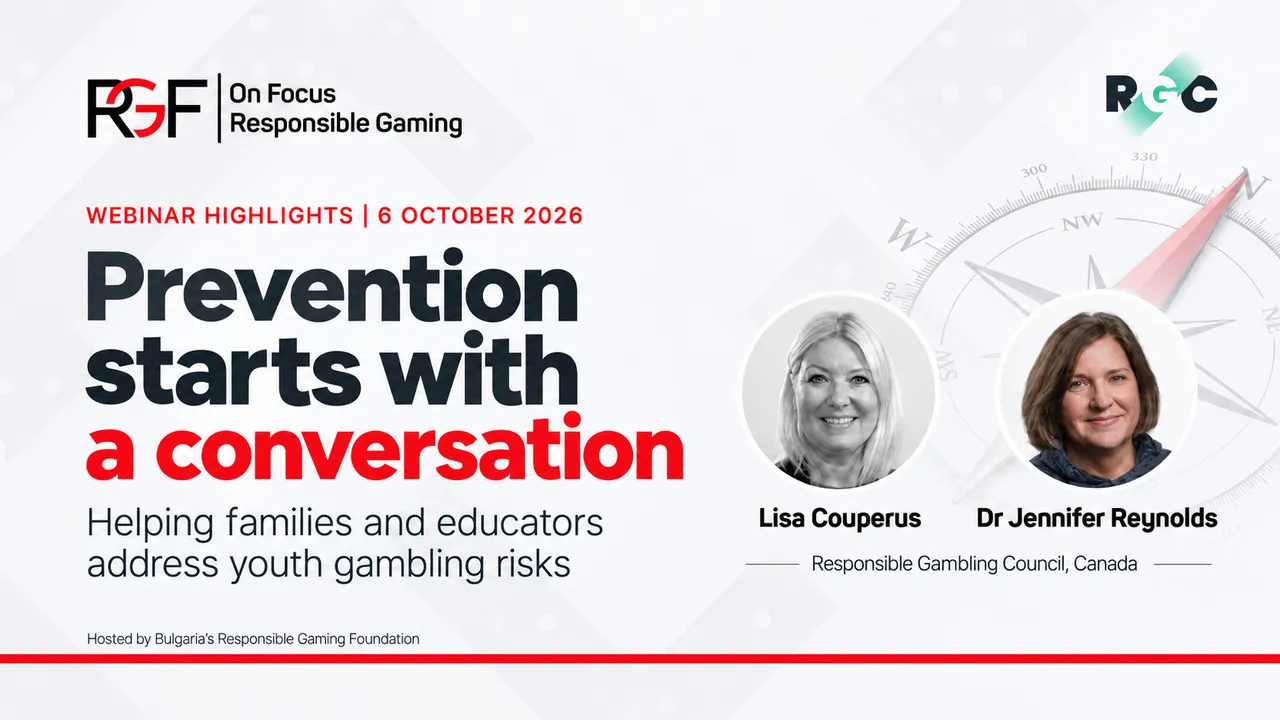
Knowing how to talk about gambling, and being willing to listen, can make a difference in protecting young people from harm. That was the message of a webinar hosted by Bulgaria’s Responsible Gaming Foundation on 6 October 2026, which brought together research and practical guidance for families and educators.
Lisa Couperus and Dr Jennifer Reynolds from Canada’s Responsible Gambling Council (RGC) led the session, moderated by Rossi McKee, the Foundation’s co-founder and chair. The discussion explored how young people encounter gambling, what makes them vulnerable and how trusted adults can respond.
Where video games and gambling overlap
For many young people, exposure to gambling extends beyond betting websites. Loot boxes, social casino games and esports betting can bring gambling or gambling-like features into familiar digital spaces.
An Ontario student study presented during the webinar found that 24% of respondents had participated in gambling activity while playing a video game in the previous year. Separately, 18% reported symptoms of problematic video gaming.
Dr Reynolds highlighted the particular vulnerability of adolescents and young adults aged 18–24. Peer pressure, early exposure to gambling and the continuing development of judgement and self-control were among the risk factors discussed.
“It is extremely important to spend quality time with our children, understand what they are doing and guide them. As a parent, I believe the most important thing is to talk to them, listen to them and try to understand what they are going through,” McKee said.
Sports betting and the illusion of control
Sports betting was another focus of the session. A comparison of Canadian studies from 2021 and 2025 showed an increase from 8.6% to 22.7% in the proportion of respondents who had placed online bets on individual sporting events.
The speakers explored the “illusion of control” - the belief that knowing a sport, team or player well makes it possible to predict an outcome with certainty. Confidence in sporting knowledge can lead people to underestimate chance and the possibility of losing money.
In-play betting, accumulator bets, peer influence and advertising on social media were also discussed as factors that can shape young people’s attitudes towards betting.
Starting the conversation
The practical advice centred on making gambling a topic that young people feel able to discuss openly.
A conversation might begin while watching a match, seeing an advertisement or hearing a child describe a video game. These everyday moments give adults an opportunity to ask questions and understand what young people are seeing and experiencing.
The speakers encouraged parents and educators to ask open-ended questions, listen without judgement and use factual explanations. Discussing probability, chance and advertising can help young people assess the messages they encounter and understand that no bet offers a guaranteed return.
Adults were also advised to keep children out of their own gambling activities, including asking them to choose numbers or allowing them to use adult betting accounts or bank cards.
Recognising changes in behaviour
The relationship between gambling harm and mental health formed a further part of the discussion. The speakers explained that anxiety, depression and alcohol or substance use can increase vulnerability to risky behaviour, while problematic gambling can, in turn, make these difficulties worse.
They highlighted changes that may warrant attention - unexplained requests for money, missing funds, unauthorized use of bank cards, increased secrecy or irritability, withdrawal from family and friends, loss of interest in favorite activities and declining school performance.
For the Responsible Gaming Foundation, the session placed families and schools at the centre of prevention. Alongside understanding the risks, adults need the confidence to raise the subject and the patience to hear what young people have to say.
The webinar encouraged parents and educators to take an interest in young people’s digital lives early, creating space for conversations before concerns become harder to address.



 Czechia